Best Resin 3D Printers in September 2026

ELEGOO Mars 5 Ultra 9K MSLA Resin 3D Printer, Smart Mechanical Sensor
-
ULTRA-FAST PRINTING SPEED: ACHIEVE QUALITY PRINTS AT 150MM/H SPEED.
-
SMART SENSORS FOR RELIABILITY: AUTOMATIC ALERTS FOR PRINTING ISSUES ENSURE SUCCESS.
-
AI MONITORING & TIME-LAPSE: REAL-TIME ISSUE DETECTION AND FUN SHARING OPTIONS.


ELEGOO Mars 5 MSLA Resin 3D Printer, Smart Mechanical Sensor
- SELF-CHECK SENSOR FOR RELIABLE PRINTING & SAFETY ENHANCEMENTS.
- AUTOMATIC LEVELING FOR EFFORTLESS SETUP AND OPTIMAL ADHESION.
- HIGH-RESOLUTION LCD & FAST SPEEDS FOR QUALITY, EFFICIENT PRINTS.
ELEGOO Saturn 4 Ultra 16K Resin 3D Printer
-
16K ULTRA DETAIL: ACHIEVE STUNNING PRINTS WITH 15120 X 6230 PX RESOLUTION!
-
AUTOMATIC HEATING: MAINTAIN OPTIMAL RESIN TEMPS FOR HIGHER SUCCESS RATES.
-
SMART MONITORING: REAL-TIME ALERTS AND AI CAMERA FOR FLAWLESS PRINTS!
ELEGOO 16K Saturn 4 Ultra Resin 3D Printer, Fast Printing up to 150mm/h
-
ULTRA-FAST PRINTING: ACHIEVE SEAMLESS PRINTS AT 150MM/H WITH TILT-RELEASE TECH.
-
16K ULTRA RESOLUTION: ENJOY UNMATCHED DETAIL WITH 15120X6230PX CLARITY.
-
SMART FEATURES: BENEFIT FROM AI MONITORING AND AUTOMATIC CALIBRATION.
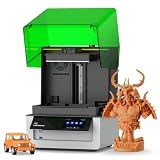
UniFormation GK3T Easy-to-Use 16K Resin 3D Printer for Stable Printing
- 16K ULTRA-HIGH PRECISION: ACHIEVE STUNNING DETAIL WITH RAZOR-SHARP CLARITY.
- USER-FRIENDLY DESIGN: ENJOY EFFORTLESS PRINTING WITH SMART FEATURES GALORE.
- REMOTE CONTROL & MONITORING: MANAGE PRINTS FROM ANYWHERE IN REAL-TIME.
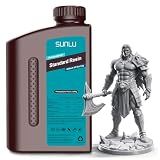
SUNLU Standard 3D Printer Resin Plus, Fast-Curing Photopolymer Resin for LCD/DLP/SLA Printers, 395-405nm UV, Low Shrinkage and High Precision, Grey 1KG
- USER-FRIENDLY: COMPATIBLE WITH VARIOUS PRINTERS, PERFECT FOR BEGINNERS!
- DURABLE & STABLE: RESISTS DEFORMATION, IDEAL FOR DIVERSE PRINTING NEEDS.
- COST-EFFECTIVE QUALITY: HIGH PERFORMANCE AT A BUDGET-FRIENDLY PRICE!
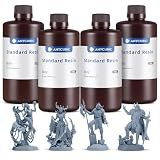
ANYCUBIC 3D Printer Resin Bundle, 405nm SLA UV-Curing Resin with High Precision and Quick Curing & Excellent Fluidity for LCD 3D Printing (4Packs*1kg Grey, 4kg in Total)
- LOW SHRINKAGE ENSURES HIGH PRECISION AND SMOOTH SURFACE FINISHES!
- QUICK CURING FOR FAST RESULTS IN ANY ENVIRONMENT; STABILITY GUARANTEED.
- TOUGH AND RIGID FOR DETAILED PRINTS; EASY MODEL REMOVAL EVERY TIME!
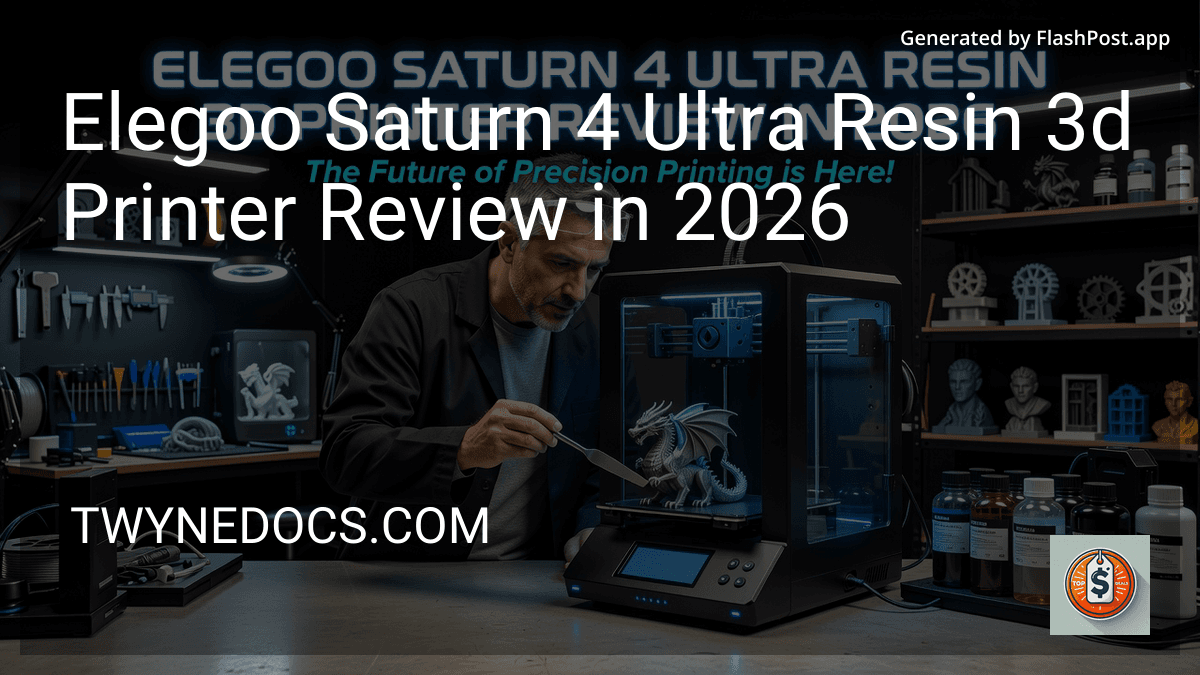
Elegoo Saturn 4 Ultra Resin 3d Printer Review in 2026 starts with one blunt reality: if your first layer fails on a large-format resin print, you don’t just lose time-you can waste a full vat of material, a release film, and several hours of cleanup in one shot. That’s exactly why this machine has drawn so much attention among hobbyists, mini painters, prop makers, and small-batch sellers who want bigger prints without the usual reliability tax.
After spending time evaluating what this 3d resin printer does well, where it still feels fussy, and how it compares to other modern 3d uv resin printer options, my takeaway is simple: this is one of the most compelling large-bed resin machines for serious home users in 2026, but it is not automatically the right buy for every workflow.
How we select products: Our team reviews products daily, analyzing customer ratings, long-term reliability patterns, print consistency, setup friction, feature usefulness, and real buyer feedback to surface machines that deliver the best value. For resin printers, we put extra weight on failure rate trends, cleaning workload, support quality, and whether premium features actually improve print success.
Is the Elegoo Saturn 4 Ultra Resin 3d Printer Review in 2026 story mostly about speed or print quality?
Both matter, but print consistency is the real headline.
A lot of buyers get distracted by marketing around fast layer exposure, tilting vats, or high-resolution screens. In real use, the standout value of the elegoo saturn 4 ultra resin 3d printer is that it aims to make large resin printing less nerve-wracking. That matters more than shaving 20 minutes off a test print.
On detailed tabletop parts, creature busts, and mechanical prototypes with tight embossed text, the machine produces the kind of crisp edge definition you expect from a modern printer resin 3d system. The extra bed size is what changes your workflow: instead of printing four parts across two sessions, you can often batch everything at once.
That’s why my definitive take is this: the best reason to buy the Saturn 4 Ultra in 2026 is not raw resolution on paper-it’s high-detail output at a scale that makes batch printing practical.
What makes the Elegoo Saturn 4 Ultra Resin 3d Printer Review in 2026 different from older resin machines?
The biggest difference is how much less “manual babysitting” this class of printer demands.
Older resin printer 3d machines often felt like precision tools with a gambling problem. You’d level carefully, dial in exposure, start a full plate, and still come back to half-successful supports and a chunk of cured resin floating in the vat. Newer smart monitoring, assisted leveling logic, and better user prompts reduce that friction.
For buyers moving up from an entry-level 3d printer with resin, this feels like a generational step. It’s closer to an appliance than a science project-though resin printing still requires gloves, ventilation, wash/curing workflow, and disciplined cleanup.
If you’re upgrading from something smaller, the transition is especially noticeable on:
- Batch printing miniatures
- Helmet or mask sub-components
- Garage kit parts
- Dental-style model workflows
- Small business production runs
Meanwhile, if you only print a single 32 mm miniature every few weeks, the larger format may be overkill.
Elegoo Saturn 4 Ultra Resin 3d Printer Review in 2026: who should actually buy it?
This machine makes the most sense for users who already know why they want resin.
The sweet spot includes:
- Miniature painters who want sharp details across full build plates
- Makers selling printed parts who need repeatable output
- Cosplay builders producing larger segmented pieces
- Advanced hobbyists upgrading from a compact printer 3d resin setup
- Studios and classrooms needing a large format resin 3d printer
It makes less sense for absolute beginners who haven’t yet decided between resin vs filament 3d printer workflows. If you mostly print brackets, enclosures, or functional workshop parts, a filament machine is usually cheaper and cleaner to run.
Here’s the simplest recommendation: buy this printer for detail-heavy visual parts, not rough utility parts.
Our selection criteria for a 2026 resin printer review
I looked at this machine through the same lens I use for any best resin 3d printer candidate: not just “can it print,” but “can it keep printing well after the honeymoon period?”
The five criteria that matter most
-
Real print success rate
A large plate is only useful if failure rates stay manageable. Smart monitoring and stable mechanics matter more than spec-sheet hype. -
Detail retention across the full build area
Some machines look great at the center and softer near the edges. A good 3d printer uv resin setup should stay consistent across the plate. -
Cleanup burden
Resin workflows are never mess-free, but some machines make vat draining, plate removal, and post-processing less irritating. -
Software and interface quality
Bad menus and flaky file handling can ruin otherwise solid hardware. A premium machine should feel predictable. -
Upgrade value
If a machine costs more in effort than it saves in productivity, it’s not a real upgrade.
For readers comparing local service alternatives before buying hardware, I’ve also seen useful context in this best 3d printing service los angeles guide and Blogspot.
What print quality can you expect from the elegoo saturn 4 ultra 16k resin 3d printer?
You should expect excellent surface detail, sharp corners, and cleaner text rendering than older mid-resolution resin systems.
On well-supported models, the elegoo saturn 4 ultra 16k resin 3d printer handles skin texture, armor scratches, chain links, cloth folds, and engraved lettering with impressive crispness. The gain is most visible on organic sculpting and decorative detail, less so on plain geometric parts.
That said, 16K doesn’t magically fix poor supports or cheap resin. If your exposure is off by even a small margin, a premium screen won’t save the print.
Definitive verdict: among enthusiast-class machines, this printer’s resolution is high enough that mechanical stability and resin tuning matter more than pixel-count bragging rights.
💡 Did you know? On modern monochrome masked LCD printers, most visible detail differences above the mid-tier range come from anti-aliasing, support strategy, and resin shrink behavior more than from headline resolution alone.
How fast is it compared with other resin printer vs 3d printer options?
It’s fast for resin, but that comparison can mislead people.
A resin printer vs 3d printer speed debate depends on geometry. A resin machine can print a full plate of miniatures in nearly the same time as one miniature of the same height, while a filament printer slows down dramatically as you add more copies. That’s why resin wins hard for batch production.
But if you’re printing one large, mostly hollow utility object, filament often finishes with less mess and lower running cost. So the practical ranking is:
- Best for many small high-detail parts: resin
- Best for large functional parts: filament
- Best for production-style miniature batches: this machine class
That’s also why buyers researching filament vs resin 3d printer should focus on output type, not generic speed claims.
What to look for before you buy a 3d printer resin machine in 2026
If you’re shopping in this category, these are the specific criteria that matter most.
1. Build volume that matches your actual parts
A bigger machine is only worth it if you print helmets, terrain, busts, or batches. For single small figurines, a smaller unit often gives you nearly the same visible quality.
2. Reliable failure detection
On a 3d printer resin workflow, one failed print can contaminate the vat and wreck the next run. Smart sensors and warning systems are worth paying attention to.
3. Manageable plate and vat design
You want easy draining, predictable reinstallation, and minimal dripping. The less awkward the hardware feels during cleanup, the more often you’ll actually use it.
4. Stable slicer support
A premium printer 3d resin machine needs mature slicer profiles, not community guesswork. Good defaults save material.
5. Ventilation reality
A 3d printer with resin is not a bedroom appliance. If you don’t have a ventilated room, garage, or enclosure setup, your buying decision should stop there.
6. Consumable costs
Release films, cleaning alcohol, gloves, paper towels, and failed prints add up fast. The best hardware still becomes expensive if your workflow is sloppy.
Price brackets: where this machine fits in the 2026 market
Even without naming exact prices, the market breaks into three clear tiers.
Entry-level resin printers: best for learning basics
These are ideal if you’re still asking what is a resin 3d printer or testing whether the cleanup fits your lifestyle. You get smaller build volumes, fewer convenience features, and more trial-and-error.
Mid-range sweet spot: best value for most hobbyists
This is where many buyers find the smartest balance of screen quality, decent speed, and manageable size. If you only print miniatures and small busts, this category often wins on value.
Premium large-format machines: best for batch output
This is where the Saturn 4 Ultra concept lands. If your goal is production efficiency, plate capacity, and reduced print splitting, a large format resin 3d printer earns its keep surprisingly quickly.
My ranking here is straightforward:
- Best for beginners: entry-level compact resin machine
- Best overall value: mid-range resin machine
- Best for volume and large parts: Saturn 4 Ultra class
How does it compare with smaller alternatives like the elegoo mars 5 ultra resin 3d printer?
The elegoo mars 5 ultra resin 3d printer style of machine makes more sense if your prints are consistently small, your workspace is tight, or you’re trying to minimize resin use per session.
The Saturn-sized platform wins on throughput. If you sell minis, print multiple prototypes, or regularly arrange 8 to 20 parts on one plate, the larger machine saves meaningful time over a month of use.
The smaller format still has real advantages:
- Easier vat cleaning
- Lower material exposure per failed job
- Reduced bench footprint
- Less intimidating setup for newcomers
So which is better? For pure convenience, smaller wins. For serious batch printing, Saturn class wins decisively.
For readers also converting 2D assets into printable geometry, Blogspot is a useful side read.
What the reviews usually get right-and wrong-about this printer
The praise is usually accurate on detail and productivity.
Users tend to love:
- The ability to print more parts per run
- Crisp miniature and statue detail
- Better automation than older resin platforms
- Strong appeal as a 3d uv resin printer for advanced hobby work
The complaints are predictable too:
- Resin mess doesn’t disappear just because the machine is smarter
- Large failed prints are more painful than small failed prints
- Bigger vats increase material handling
- Workspaces without ventilation become a deal-breaker fast
What reviewers often get wrong is pretending this class of machine is beginner-friendly just because setup is easier than before. It’s easier, yes. It’s still resin.
For broader maker ecosystem reading, I’ve seen related discussions on emediaworld.com, wordflicks.blogspot.com, md.yeswiki.net, and visit site.
Is the Saturn 4 Ultra the best resin 3d printer for most buyers in 2026?
No-and that’s exactly why this review matters.
The best resin 3d printer for most people is not always the most advanced one. For most buyers, the right machine is the one they can ventilate properly, clean comfortably, and use often enough to justify the workflow.
Here’s my recommendation by buyer type:
- Best for miniature batch printing: Saturn 4 Ultra class
- Best for first-time resin users: smaller mid-range machine
- Best for utility parts: filament printer instead of resin
- Best for outsourcing occasional projects: print service rather than ownership
If your use case is highly detailed parts at moderate to high volume, this machine is absolutely worth serious consideration.
Final verdict: is the Elegoo Saturn 4 Ultra Resin 3d Printer Review in 2026 positive?
Yes-with one condition.
The Elegoo Saturn 4 Ultra Resin 3d Printer Review in 2026 is positive because this machine solves the problem that actually matters: it makes large-format resin printing more practical, more repeatable, and more productive for experienced users. It is especially strong if you print miniatures, creature models, statues, masks, or short-run products in batches.
The single most important criterion in your decision is simple: only buy it if you truly need the larger build area at least twice a month. If you don’t, a smaller resin machine will probably give you 80 to 90 percent of the visible quality with less mess, less waste, and less stress.
Frequently Asked Questions
what is a resin 3d printer?
A resin 3d printer is a machine that uses liquid photopolymer resin and UV light to cure objects layer by layer. Compared with filament machines, it usually delivers finer detail and smoother surfaces, especially for miniatures and display models.
how does a resin 3d printer work?
A 3d printer uv resin system works by exposing liquid resin to UV light through a screen or light engine, hardening one layer at a time. The build plate lifts gradually as each cured layer separates from the film at the bottom of the vat.
resin vs filament 3d printer?
Resin vs filament 3d printer comes down to detail versus convenience. Resin produces sharper detail and smoother surfaces, while filament is usually cheaper, cleaner, and better for larger functional parts.
resin printer vs 3d printer?
The phrase resin printer vs 3d printer usually compares resin machines with filament-based 3D printers, even though both are 3D printers. Resin is better for visual detail and batch mini printing, while filament is better for everyday utility prints and lower-maintenance use.
is a large format resin 3d printer worth it for home use?
A large format resin 3d printer is worth it for home use if you regularly print large models or full plates of parts. If your prints are small and occasional, the added cleanup, resin handling, and workspace demands usually outweigh the benefits.